Transparency Act – Annual account for due diligence
March 09, 2026
According to the Transparency Act, Jotun A/S is committed to carry out due diligence, provide information upon request and publish an account of due diligence assessments each year. The following is to be considered Jotun A/S’s annual report pursuant to Section 5 of the Transparency Act for the period 1 January 2025 to 31 December 2025 and was approved and signed by the Board of Directors on 12 February 2026.
1. Organisation
Jotun is a global company consisting of 68 companies in 49 countries worldwide. The company extends its geographic reach through a network of subsidiaries, joint ventures, associated companies, sales offices and distributors. The parent company, Jotun A/S, is headquartered in Sandefjord, Norway and is subject to the requirements of the Transparency Act. In accordance with the Act, this report covers the activities of both the parent company and the subsidiaries, although the subsidiaries do not have independent obligations under the Act.
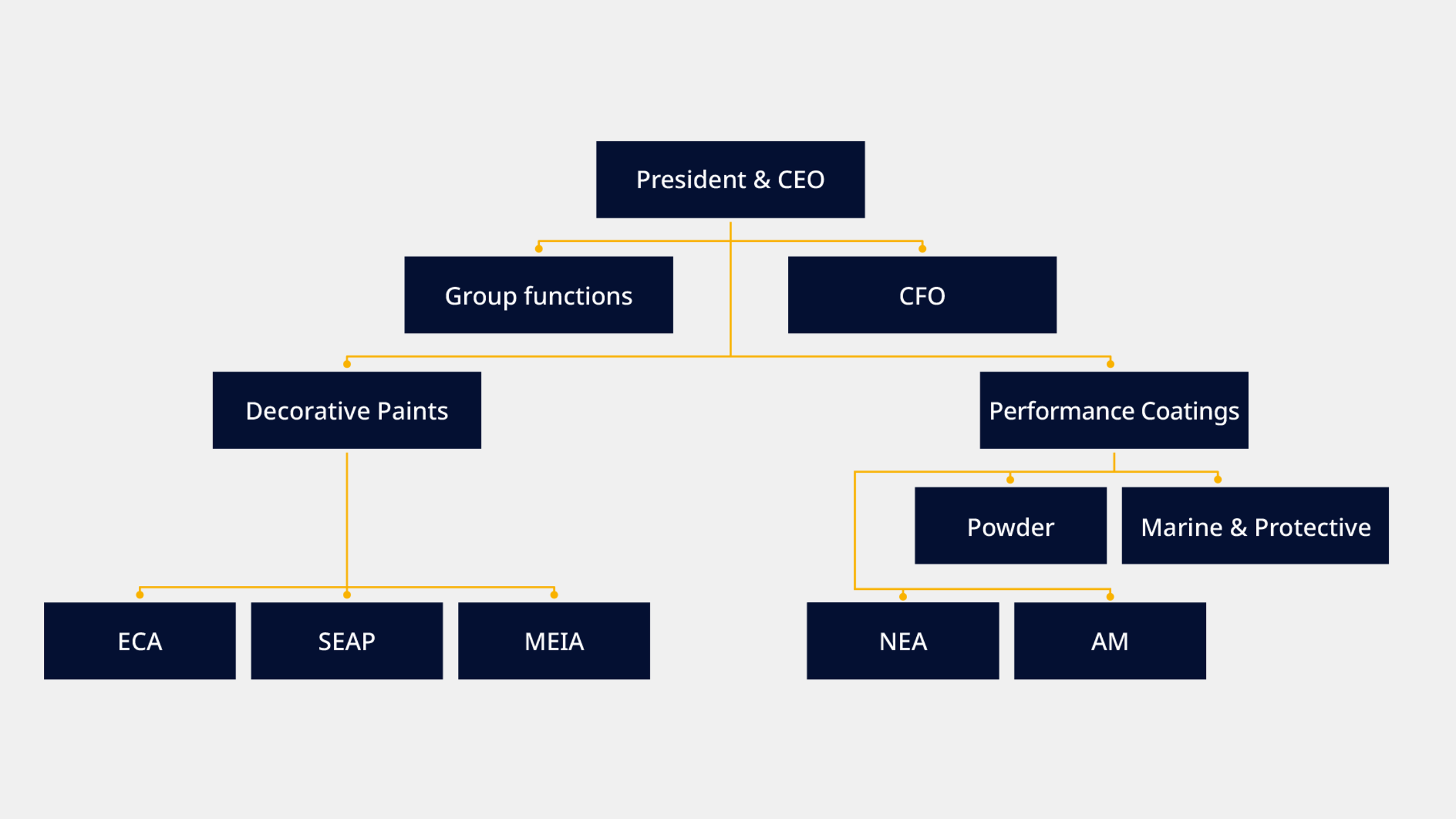
Jotun’s business is organised into five regions: Europe and Central Asia (ECA), Middle East, India and Africa (MEIA), North East Asia (NEA), South East Asia and Pacific (SEAP) and Americas (AM).
Jotun’s product and service offerings are organized into two business areas: Decorative Paints and Performance Coatings, and four business segments: Decorative Paints, Marine Coatings, Protective Coatings and Powder Coatings. For more info – see jotun.com.
2. Jotun’s commitment to human rights
Jotun has embedded the OECD Guidelines for Multinational Enterprises in its own Human Rights Policy. Jotun’s social sustainability framework is based on the company’s Human Rights Policy. This policy is aligned with the United Nations Guiding Principles on Human Rights and the International Labour Organisation’s (ILO) Declaration on Fundamental Principles and Rights at Work. The company adheres to the United Nations Global Compact (UNGC) to contribute to the goal of creating a sustainable and inclusive global business with decent working conditions.
Jotun is committed to develop an organisational culture and a relationship with our business partners that respect internationally recognised human rights and seek to avoid human rights abuses. Main principles for ensuring responsible business in Jotun are anchored with the Board of Directors of Jotun A/S and are developed and strengthened in close collaboration with Group Management. This in turn leads to a hierarchy of steering documents that ensure Jotun companies in all markets operate within the same set of rules. All policies are available to all employees through the Jotun Management System.
Jotun’s whistleblowing channel is open to both internal and external stakeholders who wish to report on any potential violations of Jotun’s Business Principles, policies, laws or regulations. Jotun encourages employees and external stakeholders to raise concerns if malpractices or wrongdoings are suspected, so the company can address and follow up the concerns. Concerns can be reported openly or anonymously, and once a concern is logged, it is investigated and handled according to established procedures. All reports are handled confidentially and individuals are protected and treated respectfully. The whistleblowing solution is GDPR compliant.
3. Framework for risk assessments
3.1 Own workforce
Jotun acknowledges that our activities may potentially impact fundamental human rights of our stakeholders. The risk varies between the different countries and regions in which Jotun is active. The majority of Jotun’s employees work in operations (production and supply chain) and sales, including technical service. Remaining employees work within various administrative functions. Due diligence of potential human rights breaches in own organisation is done through structured risk-based assessments on Group and country level, Health, Safety, Environment and Quality (HSEQ) risk assessments and reported incidents in the HSEQ reporting system.
Also, employee feedback surveys are conducted across all units at least every second year, latest in autumn 2025, and cover key topics such as diversity and inclusion, development opportunities, respect, recognition, pay and benefits, and overall workplace satisfaction. Programs done since last survey are described in chapters below. By collecting candid input from employees, we gain insights into potential risk areas that may not be visible through traditional audits or financial reviews. Identified issues are followed up with targeted action plans to ensure continuous improvement.
Examples of potential risks in own organisation include:
- Safe and decent working conditions
- Living wage
- Discrimination and harassment
- Child labour
- Freedom of association and collective bargaining
- Forced labour and modern slavery
- Freedom of expression
- Right to privacy
Through various audits and reviews, Jotun monitors each company’s risk mitigating actions. Human rights are addressed in the regular Business Reviews and Compliance Reviews in all companies. Jotun has control systems in place and regularly runs control reports on salary reviews, working hours, gender pay equality measures, and ensure all employees have proper employment contracts in a language they understand. Reviews are followed up with actions according to findings.
Jotun’s HSEQ Management System defines the requirements for how to operate worldwide with regards to health, safety, environment and quality to ensure the security of people and operations, and quality of our products. The comprehensive system provides a structure to track and manage 15 elements related to HSEQ. More information can be found on our website. Jotun reports every tertiary on sick leave, incidents (lost time injuries), working hours, fires and potential fires.
3.2 Suppliers and business partners
Jotun has implemented a structured and comprehensive approach to responsible business conduct in its global supply chain, aligned with the Norwegian Transparency Act, UN Guiding Principles, OECD guidelines and ILO conventions. This approach is supported by three core documents: the Purchasing Policy, the Supplier Approval Procedure and the Supplier Code of Conduct.
Jotun’s Group Purchasing Policy has “Sustainable sourcing” as one strategic objective and outlines the key principles and requirements for ethical, responsible, and professional procurement and sourcing of materials for Jotun entities. It details the roles and responsibilities of the Group Purchasing function and local purchasing managers, emphasizing the importance of adhering to Jotun's values, business principles, and anti-corruption policy. The policy also highlights the need for continuous improvement in purchasing practices, supplier evaluations, and the development of purchasing competence.
Further, all direct suppliers and major indirect suppliers must undergo the “Supplier Approval Procedure”, outlining Jotun's process for approving suppliers, which includes regular ESG risk assessments and third-party on-site audits. It details the responsibilities of various roles in initiating and conducting these assessments and audits.
All Jotun’s suppliers are expected to comply with Jotun’s “Supplier Code of Conduct”, which entails labour and human rights issues and requires compliance with UN Guiding Principles on Human Rights and the International Labour Organisation’s (ILO) Declaration on Fundamental Principles and Rights at Work.
Through the Supplier Code of Conduct, the suppliers commit to:
- Ensure compliance with internationally recognized standards for human rights in their own operations, and with their sub-suppliers.
- Provide a safe and healthy workplace and minimize environmental impact from their operations.
- Comply with ethical standards, hereunder anti-corruption.
Together, these documents establish clear expectations for ethical behaviour, human rights performance, and environmental responsibility for all suppliers.
Jotun screens and approves direct suppliers mainly through sustainability assessments done by EcoVadis Ratings. EcoVadis is the world’s largest and most trusted provider of business sustainability ratings and has delivered sustainability assessments to Jotun since 2022. More details about the assessments can be found on EcoVadis’ web pages.
These assessments entail the topics environment, labour and human rights, ethics and sustainable procurement. Apart from EcoVadis Ratings assessment, supplier audits are done on-site by third-party auditors. The suppliers are followed up according to established procedures depending on score in the assessment.
Jotun’s global supply chain spans over more than 50 countries and covers a wide range of sectors and risk profiles. Through a combination of international standards (Business & Human Rights Resource Centre, KPMG, OECD), sector risk mapping, and the EcoVadis platform, Jotun has identified the following salient human rights challenges:
- Child labour and forced labour
- Inadequate pay and excessive working hours
- Occupational health and safety risks
- Discrimination and lack of equal opportunities
- Lack of freedom of association and collective bargaining
- Freedom of expression and right to privacy
4. Risk assessments and mitigating actions
4.1 Own organization
In general, it is considered low risk of breaches of human rights and decent working conditions for employees in Jotun. The potential risks are described below along with mitigating actions, where relevant.
4.1.1. Safe and decent working conditions
With 40 factories and regional R&D facilities, we acknowledge the inherent health and safety risks related to our operations. Jotun has a zero vision for fatalities, injuries and fires. Still, for 2025 it is reported two fatal accidents involving external contractors working for Jotun. One accident was related to work in confined space in a shipyard, and the other was related to electrical work during project work at one of Jotun’s sites, both abroad. Several actions have been taken to avoid similar accidents in the future, such as:
- More comprehensive safety training as well as strict follow-up of the implementation, including risk assessments of high-risk jobs.
- Stronger control and follow-up of contractors working on-site.
- A new, more detailed Electrical survey to be performed and followed up at all local sites.
Apart from the serious accidents, there were instances during 2025 of minor fires and injuries that led to absence from work. The number of fires and injuries has been stable over the last few years, despite more focus, training and requirements. This work will continue and we expect this to result in a reduction of incidents over time. To constantly improve and mitigate the risks related to operations, there are a number of actions implemented, examples include:
- Comprehensive and regular training and awareness campaigns, comprising workshops, digital learning tools, discussion groups, safety walks, lessons learned etc.
- The “I Care” awareness programme has been an integral part of HSEQ work in Jotun for many years. The goal is to strengthen HSEQ awareness in Jotun in order to reduce the number of unwanted incidents. The campaign requires all companies to run three relevant campaigns each year. One is initiated on a global level, while the other two are local and should be based on local incidents, challenges or risks. In 2025, the “I Care” campaign focused on “People Safety”
- Projects to increase automation, physical barriers, safety interlocks etc to minimize risk of crush injuries.
- To mitigate fire risk, all local companies are developing a Fire Safety Philosophy: This will provide an overview of the utilization and requirements at the time the buildings were constructed compared to how it is operated today, enabling Jotun to detect potential risks and implement necessary actions
Reporting shows that some individuals also in 2025 have exceeded the maximum number of working hours in one year. Compared to 2024, there is a significant reduction in number of individuals working too many hours, mainly due to additional hires. The remaining challenge is among production staff and is due to seasonal variations in demand or sudden increase in required production volumes. The development is closely monitored, breaches are addressed and the main mitigating action is still hiring of additional staff, which will continue into 2026.
4.1.2. Living wage
Jotun’s Compensation Policy ensures that all salaries are fair, competitive, and aligned with market benchmarks. However, there remains a risk that Jotun may not consistently meet living wage standards for all employees, regardless of role or location. To address this, Jotun entered into an agreement in 2025 with WageIndicator, a global provider of living wage data. Using the “Typical Family” benchmark, living wage data will be integrated into Jotun’s HR management system starting early 2026. This will enable systematic comparison between actual salaries and living wage benchmarks. Any gaps identified will be corrected to ensure compliance by the end of 2026, allowing Jotun to demonstrate that all employees receive at least a living wage.
4.1.3. Discrimination
Jotun has clear policies in place prohibiting discrimination in any form. It is still considered a risk that discriminatory practices happen in Jotun companies and/or during hiring processes, based on age, gender, ethnicity or other grounds for discrimination. Jotun is a male-dominated company, with the risks that entails for discriminatory practices against women.
While overall results from the employee feedback survey are very positive, there remains a potential risk that fairness and consistency in treatment may vary across the organization. Exclusion or discrimination can still occur if stated commitments to diversity and equality are not consistently reflected in practice. Informal networks and uneven application of organizational values may influence opportunities and day-to-day experiences, underscoring the importance of continued focus on inclusion and fairness.
Jotun takes this seriously and addresses the risk by targeted mitigating actions that include, but is not limited to:
- Managers and teams with significantly lower results will receive special attention and follow-up to improve scores.
- Training and awareness campaigns for all employees, such as “Diversity Day” (global initiative, arranged in all companies annually), “Diversity and Inclusion Training” (mandatory for all employees, part of onboarding), and “Culture Alignment Workshop”.
- Training and awareness campaigns specifically targeted to managers, such as “Inclusive Hiring workshop”, designed to identify and minimize unconscious bias in recruiting process, learn to create job adverts that widen the applicant pool and implement inclusive hiring techniques in the interview and selection process.
- Jotun’s recruitment system is set up to not display gender or age of applicants in the first phases of recruitment.
- Salaries are set based on job profiles to ensure that jobs considered to be of equal value are paid equal salary.
4.1.4. Child labour
We do age verification of all candidates before hiring, ensuring we do not employ persons under the age of 15 in our operations, and that we do not employ persons under the age of 18 to do work that may potentially entail a risk to their health or safety. The risk is considered low.
4.1.5. Freedom of association and collective bargaining
Jotun operates in several countries where the freedom of association is forbidden or limited by law, hence there is a substantial inherent risk in this area. To ensure employee views are represented and that employees can voice their opinions, mitigating actions include:
- Anonymous employee surveys and audits play an important role to ensure issues are voiced and addressed.
- Regular meetings between employees and local management to ensure that employees can voice their opinions.
- Welfare/ethics committees and/or communications teams, to secure open communication and good relations between employees and management on working environment and welfare arrangements.
4.1.6. Forced labour and modern slavery
Jotun will not use any form of forced labour or accept any form of modern slavery. All our employees have freely chosen to work for and stay in a contractual relationship with Jotun. It is ensured that all employees have employment contracts in a language they understand. All employees are free to leave work premises at the end of their shifts, free to resign from their jobs with a reasonable time of notice, and Jotun never retains the passports of any employees. The risk is considered low.
4.1.7. Freedom of expression
It is considered a risk in some companies that employees fear negative consequences from management if expressing their opinions. Results from the employee feedback survey indicate a risk that opinions may not always be fully valued or considered. If input is solicited without genuine follow-through, or if psychological safety is compromised, employees may hesitate to speak up. Potential negative reactions, dismissal of ideas, and uneven practices can undermine open dialogue, highlighting the need for continued emphasis on active listening and inclusive communication.
Jotun constantly works to support and enhance our corporate culture where employee dialogue and feedback is essential. Actions include:
- Close follow-up of individual teams where scores from employee survey give reason for concern
- “Speak-Up” campaign. This awareness campaign emphasises the importance of fostering a culture where employees feel comfortable expressing their ideas, opinions, and concerns without fear of negative consequences. The campaign was revised in 2025 to include a stronger focus on whistleblowing as part of a speak-up culture.
- Information/staff meetings.
- Whistleblowing procedures.
4.1.8. Right to privacy
Jotun is committed to the protection of personal data through relevant legislation and Jotun’s Binding Corporate Rules (BCR). The BCR applies to all the Group’s companies, binding all to the same set of rules based on General Data Protection Regulation (GDPR). There have been occurrences of data privacy breaches in Jotun during 2025. The incidents have been reported accordingly and corrective actions have been taken. These actions include:
- Training of regional privacy resources.
- Restrict access controls to IT-systems.
- Revision of guidelines.
4.2 Suppliers and business partners
Jotun applies a multilayered risk assessment methodology that combines internationally recognised sector and country risk tools with internal category expertise and EcoVadis’ country and industry indicators. This helps Jotun identify suppliers, industries and geographies that represent the highest potential for human rights breaches.
High risk sectors include:
- Mining and chemical industry: Risks include child labour and forced labour, unsafe working conditions, insufficient wages and excessive overtime. These concerns are heightened in geographies with weak regulatory enforcement.
- Logistics and Transportation: Known issues such as poor working conditions, excessive working hours and use of subcontracted labour.
- Construction and Infrastructure: The combination of migrant labour, multiple tiers of subcontracting and weak national governance lead to higher risks of forced labour and unsafe conditions.
- Textiles and Apparel: Although Jotun purchases these products indirectly, this sector is well known for forced labour and poor working conditions across global supply chains.
High risk geographies: Myanmar, Ethiopia, Pakistan, India, Vietnam and Egypt stand out as countries with elevated risk profiles. Some suppliers in China also pose risk due to high-risk industries, despite the medium country-risk categorisation.
4.2.1. Mitigating actions
Jotun has implemented a wide range of targeted measures to reduce risks in these sectors and geographies. These include:
- Mandatory ESG assessments for all Direct Material (DM) suppliers and major Indirect material (IM) suppliers, with frequent reassessments for those with temporary passes or known risk indicators.
- Supplier action plans (CAPARs) for suppliers with high risk of child labour or forced labour. These plans include specific corrective measures, documentation requirements and timelines.
- Third-party on-site audits, conducted either by Intertek or other accredited bodies, focusing on high-risk countries and industries. From 2025 onwards, the Supplier Approval Committee selects at least five suppliers each year for additional audits, with plans to increase this number to at least ten in 2026–2027.
- Strengthened contract requirements, particularly for logistics providers and construction partners, including updated ESG expectations, labour related clauses and stricter HSEQ standards.
- Increased training and awareness building, particularly for Category Managers and supply chain teams working with high-risk categories. Jotun recognises that competence and awareness play a critical role in identifying risks at early stages.
- Systematisation and digitalisation, including the integration of high-risk chemical and packaging suppliers into the Supplier Management System (SRM) for better tracking and governance.
- Targeted follow-up for IM suppliers, especially within the top spend categories in each country. High-risk IM suppliers will receive follow-up assessments to clarify policies, documentation, governance systems and remediation practices.
4.2.2. Status and results 2025
By the end of 2025, 90 per cent of direct material suppliers have obtained a valid sustainability assessment, either through EcoVadis Ratings assessments or third-party on-site audits. 87% of all raw material suppliers have either accepted Jotun’s Supplier Code of Conduct or submitted their own, all of which have been assessed and found to meet standards equivalent to Jotun’s. Jotun’s Supplier Code of Conduct was shared in December 2025 and the overall results are therefore expected to increase in near future.
Around 30 direct material suppliers were identified as high-risk for child labour or forced labour, consistent with the high-risk industries and countries highlighted in the initial risk assessment. It is important to note that no actual findings of child labour or forced labour have been detected, the suppliers are categorized as high risk due to lack of procedures, lack of proof of implementation and/or documentation. These suppliers will receive targeted follow-up and must demonstrate improvements within set timeframes. Importantly, no confirmed human rights breaches were found at the tier1 supplier level.
For indirect materials, 1,200 major suppliers were assessed in 2025. Around 3% were identified to be very high risk, of which three showed very high risk specifically within the child and forced labour indicators. These suppliers will be followed up in 2026 with continued monitoring.
Going forward, Jotun will continue strengthening its due diligence approach. Priority actions include evaluations to expand ESG risk assessments beyond tier 1 in selected high-risk countries, increasing coverage for IM suppliers, and scaling up the number of third-party on-site audits. The company will also broaden its assessment emphasis to include occupational health and safety, as data indicates this is a particularly prevalent risk area. Jotun remains committed to continuous improvement, responsible sourcing and transparency throughout the supply chain.